HVAC Services in Altadena: Heating and Cooling Built for the Foothills
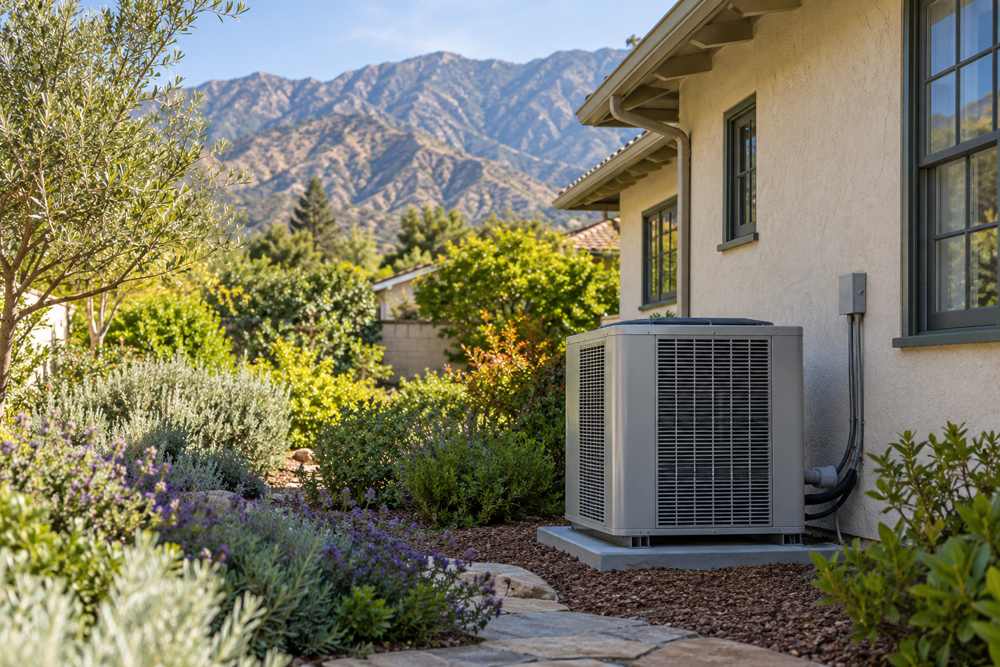
Altadena sits right at the base of the San Gabriel Mountains, and its weather reflects that. Summer afternoons turn hot, foothill nights cool off sharply, and Santa Ana winds push dust and dry heat through the neighborhoods several times a year. A home here needs a system that can both cool hard in the afternoon and heat through a cold night, and much of Altadena's older, varied housing was never set up to do both well. That is where a full-service contractor matters, and Green Planet HVAC provides HVAC services in Altadena across the 91001 area, handling the whole system rather than one piece of it.
The advantage of a single contractor is that the system is treated as one thing. Cooling, heating, air movement, and air quality all work together, and when one company installs and services all of it, there is no finger-pointing between a furnace vendor and an AC vendor when something goes wrong. For an Altadena homeowner, that means one number to call and one team accountable for whether the house stays comfortable.
What Altadena's Climate Asks of a System
The mountain-edge setting gives Altadena a wider temperature range than the flatter parts of the valley. The same week can call for real air conditioning by day and real heat at night, so a system sized only for one job falls short on the other. Santa Ana events add their own demand, driving heat and fine dust that a home's filtration has to manage, which is why indoor air quality is part of the conversation here and not an afterthought. An aging or undersized system shows its limits fastest during exactly these swings.
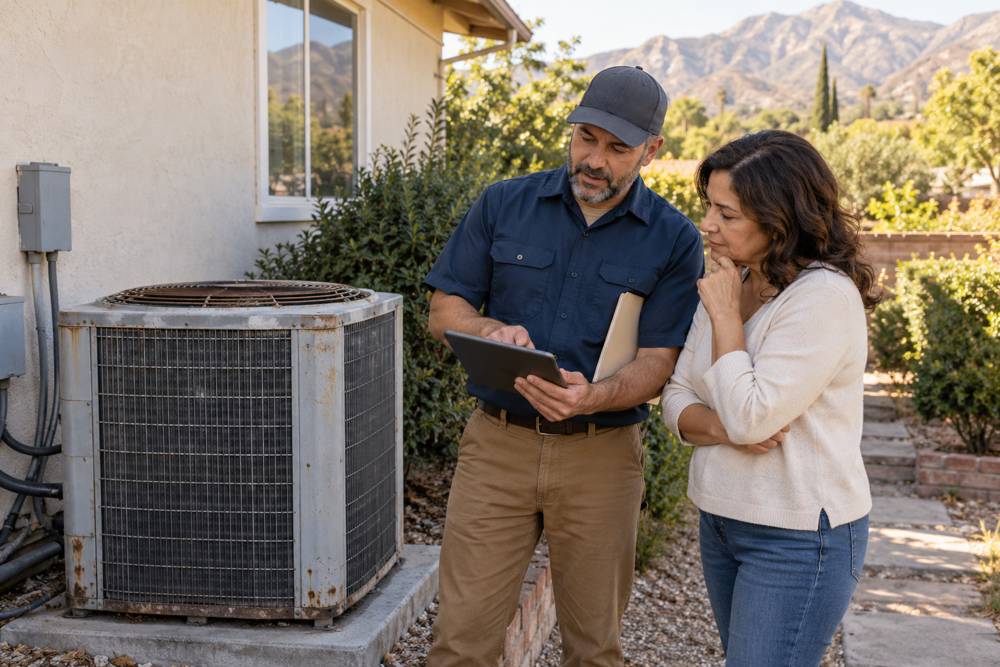
Older Altadena homes carry the added challenge of equipment and ductwork that has been in place for decades. Systems lose efficiency as they age, ducts leak and lose conditioned air, and a house that once felt fine starts running longer and costing more to hold a temperature. Green Planet HVAC starts with an honest evaluation of what is actually there before recommending anything, so a homeowner understands the condition of the system rather than being sold the largest job by default.
Altadena Sits at the Mountain’s Edge
At the base of the San Gabriel Mountains, Altadena sees hot afternoons, sharply cooler nights, and Santa Ana winds, so a system here has to handle both strong cooling and real heating rather than one or the other.
Altadena Is Unincorporated Los Angeles County
HVAC permits run through the county rather than a city building department, which shapes how installations and replacements are filed and inspected.
California Sets a Minimum System Efficiency
New air conditioning and heat pump systems in the state must meet a SEER2 rating of at least 15.2 under Title 24, and modern equipment reaches it while running on greener refrigerants than older systems used.
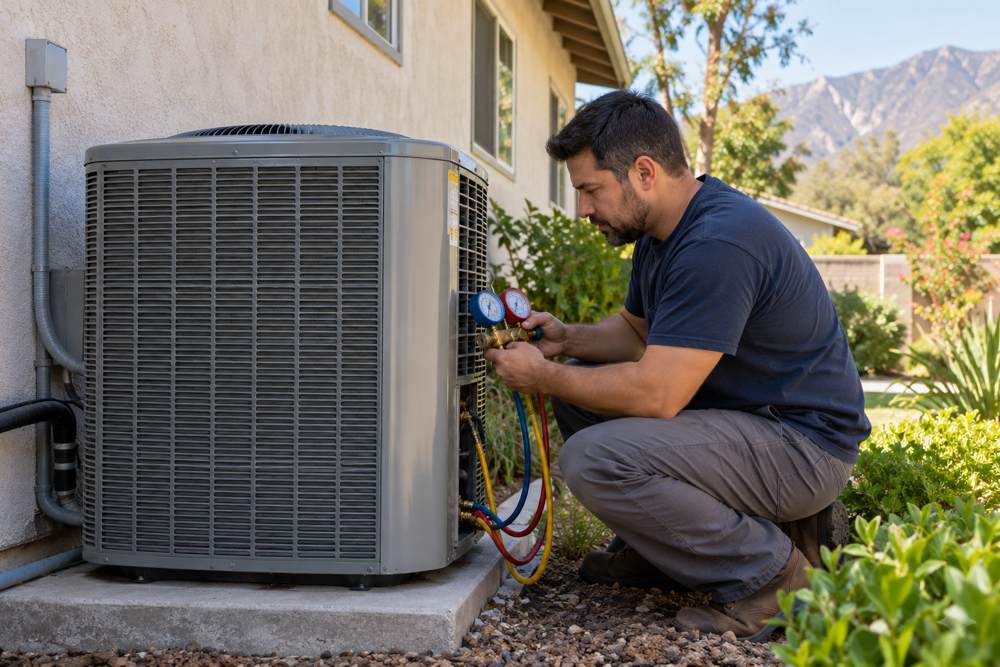
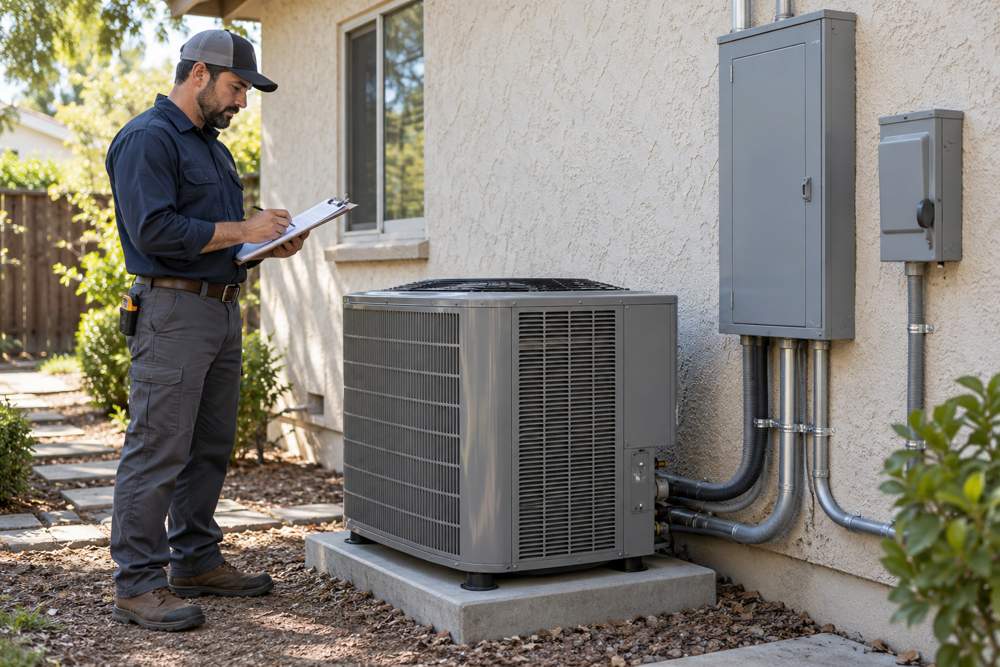
Covering a home in a climate like Altadena's takes more than one kind of equipment, and Green Planet HVAC works across the full range. That includes air conditioning installation and repair, furnace and heating installation and repair, heat pump systems that both heat and cool, and ductless mini-splits for rooms, additions, or homes without ductwork. It also covers the parts of the system that are easy to overlook: air duct replacement when old runs are leaking, indoor air quality upgrades for the dust a foothill home takes in, and annual maintenance to keep a system running before it fails.
Matching the right approach to the home is the point. A house with sound ductwork may be best served by a new central system, while an addition, a converted space, or a home with no ducts is often a better fit for ductless. The same honest evaluation that opens every job is what decides which path makes sense, rather than applying one solution to every Altadena home.
Repair, Replace, and Efficiency
The question many Altadena homeowners face is whether to keep repairing an older system or replace it. The answer comes from the equipment: its age, how often it is breaking down, and how hard it is working to hold a temperature. A system near the end of its life that needs frequent repairs is usually costing more over time than a replacement would, while a newer unit with a single fault is a clear repair.
When replacement is the right call, efficiency standards come into play. California requires new air conditioning and heat pump systems to meet a SEER2 rating of at least 15.2 under the Title 24 energy framework, and modern equipment meets or exceeds it while running on greener refrigerants than older systems used. The federal heat pump tax credit ended after 2025, though utility and state programs move on their own cycles and are worth confirming at the time of the estimate. Green Planet HVAC sizes any new system to the home rather than simply matching the old one, since an oversized or undersized unit wastes energy and wears out faster.
Permits in Unincorporated Altadena
Altadena is an unincorporated community in Los Angeles County, which means HVAC permitting runs through the county rather than a city building department. Most installations and replacements need a mechanical permit, and work that adds or changes electrical service, such as a new condenser circuit, needs an electrical permit as well. An older home may need its electrical panel assessed to confirm it can carry a new system. Green Planet HVAC handles the permit process and checks the electrical up front, so the paperwork and the power are settled before the work starts rather than surfacing partway through.
What Green Planet HVAC Brings to the Job
Green Planet HVAC is a licensed California contractor, CSLB #894993, with NATE-certified technicians and more than twenty years of Southern California experience, based at 2219 W Olive Ave in Burbank and serving Altadena and the greater Los Angeles area. The company installs and services the major heating and cooling brands, holds to upfront pricing with no surprises, and runs each project from an honest evaluation through to a tested, running system, documenting the work so manufacturer warranties stay protected. For a homeowner weighing Green Planet HVAC, a license to verify, a clear diagnosis, and a quote that holds are what separate a contractor worth hiring from one to avoid.
Serving Altadena and Greater Los Angeles
Green Planet HVAC works throughout Altadena, from the neighborhoods along Lake Avenue and the streets near Eaton Canyon to the tree-lined blocks beneath the San Gabriel Mountains, and across the surrounding Los Angeles area. A homeowner facing an aging furnace, an air conditioner that cannot keep up on a hot afternoon, leaking ductwork, or a home that has never had proper cooling can book a free quote and get an honest evaluation and a sizing plan before committing to anything. To schedule HVAC services in Altadena, reach Green Planet HVAC at (818) 450-5667 and have one licensed team diagnose the system, recommend the right fix, handle the permits, and leave it tested and running.
As of 2025, Glendale had a Census-estimated population of 187,823[15] making it the 4th-most populous city in Los Angeles County and the 24th-most populous city in California.
In 1798, Verdugo retired from the military and began expanding his ranch operations. Soon he had nearly 2,000 head of cattle, 670 horses and 70 mules. With the help of his son, Julio, he built several adobe structures for various uses. Workers grew crops such as grains, peppers, oranges, figs, grapes and pomegranates, and also made wine.[19]
When Jose Maria Verdugo died in 1831, his estate was divided between his son, Julio, and his daughter, Catalina.[19]
In 1843, the Mexican government, claiming that the Verdugo family was not using the 5,832-acre portion of Rancho San Rafael situated in the Crescenta Valley to graze his herds, granted that portion to Ygnacio Coronel, who named it La Cañada Atras de Rancho Los Verdugos ("The Canyon Behind the Verdugo Ranch").[21]
In 1861, Julio Verdugo took out a mortgage to build a larger house. Unable to make the loan payments, the family was forced into bankruptcy proceedings. In 1871, the court divided the ranch into several parcels to satisfy the many claims against the Verdugos.
The arrival of the railroad in Southern California set off a real estate boom. In 1883, soon after Atwater Village was settled, the Atwater Tract Office brought train service to the area.[27] On March 11, 1887, Erskine Mayo Ross, Cameron E. Thom, and several others, filed the first plat for Glendale, described as "Pasadena's first and only rival."[28] It was bounded by First Street (now Lexington Drive) on the north, Fifth Street (now Harvard Street) on the south, Central Avenue on the west, and the Childs Tract on the east.[29]
An important civic booster of the era was Leslie Coombs Brand (1859–1925), who partnered with Henry E. Huntington to bring the Pacific Electric Railway, or the "Red Cars", to the area. The Glendale–Burbank Line, which was operational from 1904 to 1955, ran from Downtown Los Angeles to Burbank via Glendale. At the railroad dedication celebration, Brand spoke of "his early dreams coming true, in which he pictured a country home in close proximity to the city." Brand also owned Glendale Light & Power Company, the Miradero Water Company, and the Consolidated Water Company.[32][33]
The architecture firm of Anderson and Murdock won a contract to construct a new city hall in 1910, and it was completed in 1912.[34]
Pioneering endocrinologist and entrepreneur Henry R. Harrower opened his clinic in Glendale in 1920, which for many years was the largest business in the city.
The Hotel Glendale, a six-story beaux-arts building which boasted 160 rooms and two elevators, became Glendale's tallest building when it opened in 1925.[36] Its location, at the intersection of Broadway and Glendale Avenue, was chosen because of its proximity to several transportation lines.[37]
With the proliferation of jet aircraft, Grand Central Airport's relatively short 3,400-foot runway was unable to accommodate modern aircraft. In 1959, the airport shut down.[53] In 1961, Walt Disney purchased a large portion of the closed airport to establish a creative workshop for employees working on the construction of Disney theme parks and attractions worldwide. Initially named WED Enterprises, the team came to be known as Walt Disney Imagineering.[54]
Until as late as the 1960s, Glendale was a sundown town, which meant that non-white people were required to leave city limits by a certain time each day or risk arrest and possible violence.[55] This was achieved through, among other methods, racist housing covenants and police intimidation.[56]
In 1964, Glendale was selected by George Lincoln Rockwell to be the West Coast headquarters of the American Nazi Party. In 1965, an anti-Nazi political demonstration co-sponsored by several groups — Christians Against Bigotry, Anti-Nazi Congress of America, and Jewish Survivors of Concentration Camps — featured actor Ronald Reagan as a speaker. The Los Angeles County Board of Supervisors became involved, amending a law regarding the activities of subversive groups, which was originally drafted in 1941 to control the German American Bund.[57] After a legal battle with the city of Glendale, the party moved their headquarters to El Monte in 1966.[58][59]
The emergence of increasingly visible ethnic groups—including Armenians, Cubans, Filipinos and Koreans—changed the official discourse in Glendale. In 1972, C.E. Perkins, then city manager, encouraged the Rotary Club of Glendale to prepare itself as the city could no longer remain isolated in an increasingly diverse America.[60] Through the 1970s, concurrent with increasing immigration into Glendale, was the city's rapid urbanization.[61] During this era, the Glendale Freeway and the Ventura Freeway were constructed. The Glendale Galleria shopping mall opened in 1976, and was further expanded in 1982.[62]
In the 1980s, many single-family homes in south Glendale were demolished for apartment and condominium construction. This construction boom resulted in Glendale's population growing at a rate 60% higher than that of the county at large, turning the city into a denser, younger and more cosmopolitan urban center.[63] In 1983, Larry Zarian was elected as the city's first Armenian city council member, and in 1986, he became the city's first Armenian mayor.[64] In 1984, the city revived municipal bus service with the Glendale Beeline.[65]
By 1990, Glendale was, proportionately, more immigrant than either the city or county of Los Angeles, with 45% of its residents being foreign-born.[63] By the mid-1990s, Glendale's Anglo-American population had been surpassed by Armenians and Latinos.[61] Some Anglo-American residents, largely fueled by anti-immigrant sentiment, decried the increased density in South Glendale.[66]
On January 26, 2005, a train crash occurred when a southbound Metrolinkcommuter train collided with a sport utility vehicle that had been abandoned on the tracks immediately south of the Chevy Chase Drive grade crossing, on the Glendale-Los Angeles border. The train jackknifed and struck trains on either side of it — one a stationary Union Pacific freight train, and the other a northbound Metrolink train traveling in the opposite direction. The collision caused the deaths of 11 individuals and injured 177 more.[67]
In 2021, the Armenian American Museum broke ground in Central Park.[80] In 2024, the Martial Arts History Museum moved to an 8,000 square foot facility in downtown Glendale,[81] the latest piece in the "new 'museum row' now that Glendale has the Neon Museum, the Armenian Museum and now the Martial Arts History Museum."[82]
Glendale is located in the southeastern San Fernando Valley, 10 miles (16 km) north of downtown Los Angeles.[83] According to the United States Census Bureau, the city has a total area of 30.6 mi2 (79.212 km2); 30.5 square miles (79 km2) of it is land and 0.13 square miles (0.34 km2) of it (0.43%) is covered by water. Glendale is the fourth largest[84] city within Los Angeles County.
Several known earthquake faults criss-cross the Glendale area and adjacent mountains, as in much of Southern California. Among the more recognized faults are the Sierra Madre and Hollywood faults, situated in the city's northern and southwestern portions, respectively. Additionally, the Verdugo and Raymond faults intersect through the city's central and southeastern areas. The San Gabriel fault, meanwhile, is located northeast of the city. Roughly 75 miles (121 km) northeast of Glendale is a major portion of the San Andreas Fault known as the "Big Bend", where quake-recurrence tracking shows major activity roughly every 140–160 years. The closest portion of the San Andreas is actually 29 miles (47 km) from Glendale. The last major quake along the southern San Andreas was recorded in 1857.
In the 1971 San Fernando earthquake, which took place along the western edge of the Sierra Madre Fault, surface ruptures were nearly 12 miles (19 km) long, including one portion a few miles northwest of Glendale. Most of the damage was in the northern San Fernando Valley, though 31 structures in Glendale suffered major damage and had to be demolished, plus numerous chimneys collapsed. The 1994 Northridge earthquake had an epicenter about 18 miles (29 km) from Glendale. The city suffered severe damage to a public parking structure and sections of the Glendale Galleria parking structures and exterior columns incurred damages.[85]
Glendale has a Mediterranean climate (Köppen climate classification: Csa), with hot summers and mild winters with occasional rainfall. The highest recorded temperature in Glendale was 115 °F (46 °C) on September 6, 2020. The lowest recorded temperature was 17 °F (−8 °C) on February 15, 1990. The warmest month is August and the coolest month is January.
The annual average precipitation is just over 21 inches (530 mm), mostly falling between November and April. Rainfall totals are highly variable from year to year, with the wettest years (sometimes over 30 inches (760 mm) of rainfall) usually associated with warm El Niño conditions, and the drier years (sometimes under 10 inches (250 mm) of rainfall) with cool La Niña episodes in the Pacific.
The hills and mountains of northern Glendale very rarely have snow, owing to its warmer temperatures during the winter. Frost sometimes occurs at night from late November to early March. Heavy rains and thunderstorms are also common during the winter. The spring brings temperate weather, with little rain. The summer is usually fairly warm, with highs from 85 °F (29 °C), to the low 100s (40 °C). Summer is usually very dry, but thunderstorms can come from Arizona, bringing high humidity into the area. These rare days cause heat indices over 120 °F (49 °C). Fall often brings clear and dry weather, but can be gusty due to the Santa Ana winds, blowing in once or twice a year from October to December. Santa Ana winds can reach up to 70 miles per hour (110 km/h), with gusts up to 100 miles per hour (160 km/h) in mountain passes and canyons. Thunderstorms occur very rarely and they are accompanied by gusty winds and hail.[86]
As of 2024, Glendale hosts a Census-estimated population of 187,823, down 8,720 (–4.4%) from the 2020 United States census count of 196,543.[11] At the 2020 census, the age distribution was 22.9% under 18, 58.7% from 18 to 64, and 18.4% who were 65 or older.[106]
Glendale, California – Racial and ethnic composition Note: the US Census treats Hispanic/Latino as an ethnic category. This table excludes Latinos from the racial categories and assigns. them to a separate category. Hispanics/Latinos may be of any race.
Armenian families have lived in the city since the 1920s, but the surge in immigration accelerated in the 1970s. Armenian Americans are well integrated into the city, with many businesses, several Armenian schools, and ethnic/cultural organizations serving this ethnic group. Beginning in the late 1970s, as a result of the Lebanese Civil War and the Iranian Revolution, a dramatic influx of Lebanese Armenians and Iranian Armenians began to arrive in Glendale.[113]
Beginning in the late 1980s, with assistance from family and friends already there, Armenians from the former Soviet Union began arriving.[83] In the Glendale Unified School District, by 1988, along with students from the Middle East, they had become the largest ethnic group in the public schools, now having a larger number than Latinos.[114]
By 1999, about 25% of the population spoke Armenian and there were many Armenian businesses.[115]
According to the United States 2000 Census, Glendale is home to 65,343 Armenian Americans[116][new archival link needed] (making up 34.1% of the total population), increasing from 1990 when there were 31,402 Armenian Americans in the city.[117] As of 2005, one-third of Los Angeles' estimated 153,000 Armenians (or 51,000, around a quarter of Glendale's 205,000 residents) lived in Glendale. At that time, Armenians held a majority on the Glendale city council,[118] and it had done so since that year.[119] By 2005, the Armenian population was 40% of the total population.[119]
In 2014, a Glendale Police Department spokesperson, stated, "In five to eight years, the [Armenian] community went from a few thousand to about 40,000."[83] Levon Marashlian, an instructor of Armenian history at Glendale College, stated that in the early 1990s Glendale's Armenian community became the largest in the Los Angeles metropolitan area, surpassing the Armenian community of Hollywood.[83] Alice Petrossian, the GUSD director of intercultural education, stated that Burbank lies within the middle of other Armenian communities, so it attracted Armenians.[114] There are also a great number of Armenian immigrants from Iran who, due to the religious restrictions and lifestyle limitations of the Islamic government, immigrated to the US, many to Glendale since it was where their relatives resided.
In 1994, a new headquarters of the Armenian National Committee of America-Western Region opened in Glendale. ANCA Chairman Raffi Hamparian stated "One could look at it cynically and say they're coming because this is an election year, but on the other hand[,] the Armenian community has a lot of friends, because we're active in the public life of many cities[.]"[120] In 2004, the Armenian Cultural Foundation started planning for an educational and recreational youth center in south Glendale. In 2009, upon the center's completion, the various Armenian Revolutionary Federation-aligned organizations—such as the Armenian National Committee of America, the Armenian Relief Society, the Armenian Youth Federation and Hamazkayin—moved to this new facility.[121]
Homenetmen, a non-aligned sport and scouting organization, started its Glendale Ararat chapter in 1983. Since 1996, the chapter has been located in neighboring Glassell Park.[124]
The Mexican American community was established in Glendale by the 1960s. The late 1980s and early 1990s also saw increases in Mexican American population as Glendale offers higher-quality education in a safer suburban environment away from the city.[83]
Several Korean cities have sought to create business and cultural relationships with Glendale.[125] Central Park has a monument to commemorate Korean comfort women of World War II. It was the only such monument on the West Coast until the opening of the San Francisco Comfort Women Memorial in 2017.[126]
As of 2012[update], Filipino Americans were the third largest minority group in Glendale, making up seven percent of the city's total population, overtaking Korean Americans.[127] In 2022, the Filipino American Friendship Monument was unveiled in Central Park.[128]
After the Iranian Revolution, many Iranians migrated to the cities seeking a suburban city with lower crime and quality education.[129]
Since at least the 1960s, there has been an LGBT+ community in the Adams Hill neighborhood. The neighborhood was home to Matthew Schmidt and Albert Antunes, known as "Matthew and Buddy of Glendale," who were known to host costume parties for the community.[137][138]
Since 2022, glendaleOUT has hosted the annual Glendale Pride in the Park event held at Adams Square Mini-Park.[141][142] The event, a family-friendlypicnic,[143] is a privately organized event which has faced difficulty in securing financial support from the City of Glendale.[144][145]
Since 2019,[151] glendaleOUT has advocated on behalf of Glendale's LGBT+ residents. Since 2025, Glendale has its own PFLAG chapter.[152] Though it serves all of Los Angeles County, GALAS LGBTQ+ Armenian Society has been recognized as a community leader by Glendale elected officials for their support for the local Armenian LGBT+ community.[153]
Grand Central Airport was a municipal airport developed from 1923 which became the largest employer in Glendale for many years, and contributed to the development of aviation in the United States in many important ways. The main terminal building still stands as part of the Walt Disney Imagineering campus, and includes both Art Deco and Spanish-style architectural elements. The facility was the first official terminal for the Los Angeles area, as well as the departure point for the first commercial west-to-east transcontinental flight flown by Charles Lindbergh. During World War II, the Grand Central Air Terminal building was camouflaged to protect it from enemy targeting. It was closed down in 1959, and made way for the Grand Central Business Centre, an industrial park.
In 1994, Steven Spielberg, Jeffrey Katzenberg, and David Geffen formed DreamWorks SKG, a diversified entertainment company. DreamWorks Animation remains located in the city's Grand Central Business Centre on land formerly occupied by a helicopter landing base next to the old airfield (and next to KABC-TV). Following the acquisition of DreamWorks Animation by Comcast and its NBCUniversal subsidiary in 2016, Katzenberg said that "We will absolutely continue to make animated films here."[160]
In October 2024, Mayor Elen Asatryan travelled to South Korea, where she struck an entertainment partnership deal with the Incheon Free Economic Zone. The agreement includes a new government-to-government platform jointly built by the governments of Incheon and Glendale and sharing it with entertainment companies in both cities.[163]
In 2016, the Museum of Neon Art (MONA), which focuses on historical neon signs, moved to downtown Glendale, with the City committed to funding the museum's new site and construction.[172] The museum has featured exhibitions dedicated to the local community, including Armenians[173] and LGBTQ+ people.[174]
By 2024, the Martial Arts History Museum, the Museum of Neon Art, and the Armenian American Museum were considered to be part of a new "museum row."[82]
The Alex Theatre is a performing arts center featuring live performances and film screenings.[178]
The City sponsors several concert series: the Brand Summer Music Series, at the Brand Library;[179] the Jewel City Concert Series, at the Artsakh Paseo;[180] and the Summer Concert Series, at Verdugo Park.[181]
The city has nearly 50 public parks, from Deukmejian Wilderness Park in the north to Cerritos Park in the south.[185] Notable parks include Brand Park.
According to the city's most recent annual comprehensive financial report, the city's various funds had $576 million in revenues, $543 million in expenditures, $2,090 million in total assets, $481 million in total liabilities, and $460 million in cash and investments.[186] Glendale elects its City Council members at large, to a four-year term. Elections are held on a Tuesday after the first Monday in April of odd-numbered years along with the Glendale Unified School District Board of Education and the Glendale Community College District Board of Trustees.
In 1977 and 1978, 10 murdered women were found in and around Glendale in what became known as the case of the Hillside Strangler. The murders were the work of Kenneth Bianchi and Angelo Buono, the latter of whom resided at 703 East Colorado Street, where most of the murders took place.[191]
In 2014, Glendale was named the ninth-safest city in America in a report published by 24/7 Wall Street based on violent crime rates in cities with more than 100,000 people.[192] Also in 2014, real estate company Movoto used FBI data crime data from 2013 to conduct a study of 100 U.S. cities with populations between 126,047 and 210,309 residents and concluded that Glendale was the safest mid-sized city in America.[193][new archival link needed]
Glendale USD operates a foreign language (FLAG) program that allows students to study in dual immersion in one of seven languages (Armenian, French, German, Italian, Japanese, Korean, and Spanish) from kindergarten level, with Western Armenian and Filipino/Tagalog being considered for addition.[196] The FLAG program has been recognized for its successes at state level[197]
The city operates the Glendale Police Department, which employs 450 personnel including 300 sworn officers[208] and operates helicopter operations in conjunction with Burbank Police Department in the form of a Joint Air Support Unit.[209]
The Glendale Fire Department responds to about 17,000 calls for service annually.[210] The department has nine stations, with mutual aid provided other local departments.[211] The Verdugo Fire Communications Center in Glendale was established in 1979 to consolidate fire dispatching and telecommunications between 13 local fire departments.[212]
A 2021 Metro staff report for the Metro Board's Planning and Programming Committee has recommended corridors where the transportation agency could pursue new bus rapid transit lines, including one between downtown Glendale and East Los Angeles College, a 13.64-mile (21.95 km) corridor passing through Los Feliz, Silver Lake, and Echo Park.[220]
During the 1990s, the city advocated for Los Angeles Metro Rail service.[225][226] Since 2016, Metro and Eco-Rapid Transit have studied has been the creation of a light rail line along the Burbank-Glendale-Los Angeles Union Station corridor, potentially allowing trains to leave the existing right-of-way to travel through the commercial core of Glendale.[227]
Using a grant from the Southern California Association of Governments, the City of Glendale is now in the midst of a feasibility study for a streetcar project. The city is considering two alignments for the proposed system, both of which would feature 16 stops running approximately 2.88 miles (4.63 km) between Stocker Street in the north and the Glendale Transportation Center in the south, where it would connect with Metrolink and Amtrak trains.[228]
The closest airport that serves Glendale is the Hollywood Burbank Airport. The airport is owned by the Burbank–Glendale–Pasadena Airport Authority, a joint powers agreement between the cities of Burbank, Glendale, and Pasadena.[229]
^Kleinbaum, Josh (May 12, 2004). "Bringing magic to San Fernando". Glendale News Press. Tribume Publishing. Archived from the original on December 29, 2016. Retrieved February 26, 2025.
^Jacqueline Hernandez. "Spotlight on glendaleOUT". Glendale Library, Arts & Culture. Archived from the original on December 27, 2024. Retrieved October 21, 2024.
What HVAC services does Green Planet offer in Altadena?
Green Planet HVAC covers the full range for a home: air conditioning installation and repair, furnace and heating work, heat pump systems, ductless mini-splits, air duct replacement, indoor air quality upgrades, and annual maintenance. Handling all of it through one contractor keeps the system working together and gives the homeowner a single point of accountability. Every job starts with an honest evaluation and a free quote.
Should I repair or replace my older Altadena system?
It depends on the equipment’s age, how often it is breaking down, and how hard it is working to hold a temperature. A system near the end of its life with frequent repairs usually costs more over time than a replacement, while a newer unit with a single fault is a clear repair. Green Planet HVAC gives an honest evaluation of the system before recommending either path.
Do I need a permit for HVAC work in Altadena?
Usually yes. Because Altadena is unincorporated Los Angeles County, HVAC permits run through the county, and most installations need a mechanical permit, with an electrical permit where new circuits are added. An older home may also need its panel assessed.